
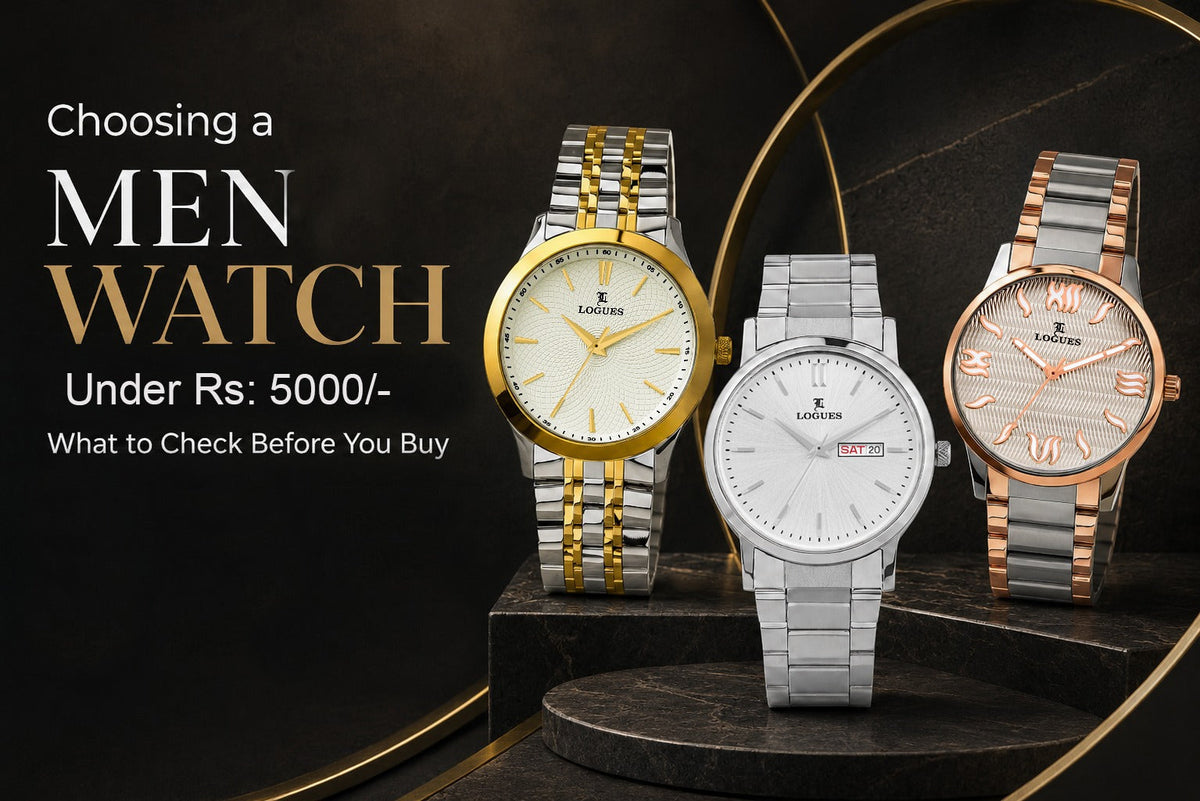
Under five thousand rupees is where the overwhelming majority of watch buying in India actually takes place, and it is also, awkwardly, where the gap between two similarly priced products is at its widest. Two watches listed at the same figure on the same marketplace, photographed to look almost identical, can be built to entirely different standards, and none of the difference is visible in the images. The good news is that the difference is not hidden. It is stated in the specifications, and it takes about five minutes to read them properly. What follows is what to look at, in the order that matters.
Start With the Case Material
Look for stainless steel, and specifically for a listing that says so. 316L stainless or an equivalent grade resists corrosion in humid and coastal conditions, takes a proper brushed or polished finish, and does not react with skin the way plated base metals eventually do. It is the correct starting point at any price and it is entirely achievable in this segment.
The listings that deserve caution are the ones that say alloy, or metal, or that simply omit the case material altogether. A base metal case with a thin decorative plating photographs identically to steel on day one and for several months afterward. What happens next is predictable. Sweat and friction wear the plating through first at the lug edges and around the case back where contact is constant, exposing a differently coloured metal underneath, and unlike steel a plated case cannot be refinished. The watch is simply finished. If a listing will not tell you what the case is made of, that omission is the answer.
Understand What the Crystal Will Cost You in Year Two
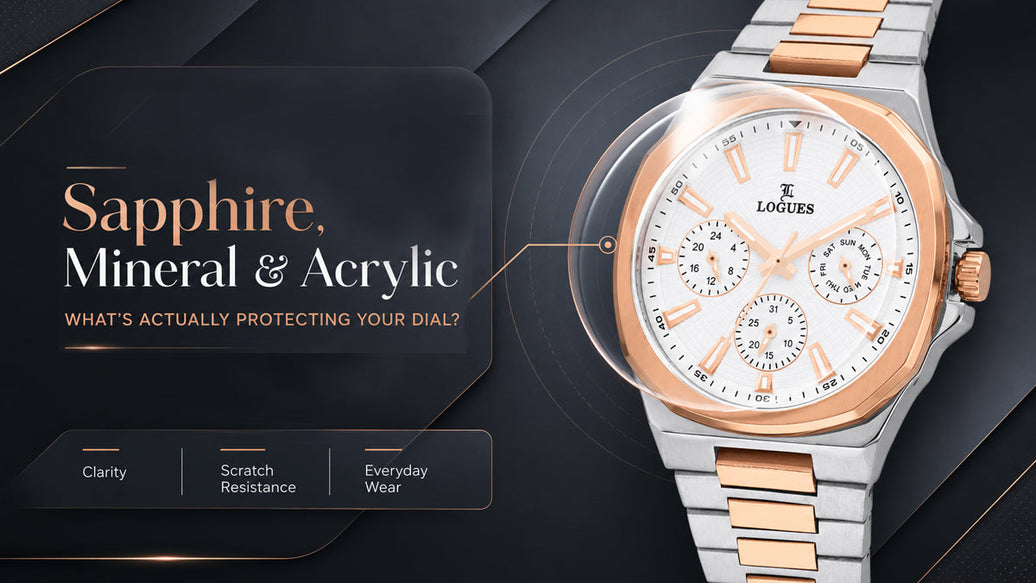
At this price point mineral glass is the standard fitment and sapphire coated glass is the meaningful upgrade. This is a specification that has almost no effect on how the watch looks when it arrives and an enormous effect on how it looks eighteen months later. A crystal that picks up fine scratches across its face in the first few months makes the entire watch look neglected regardless of how well the case and dial were made. Of all the specifications in this segment, this is the one most worth paying a small premium for, because it is the one that determines whether the watch still looks good long enough to be worth having bought.
Read the Water Resistance Number Correctly
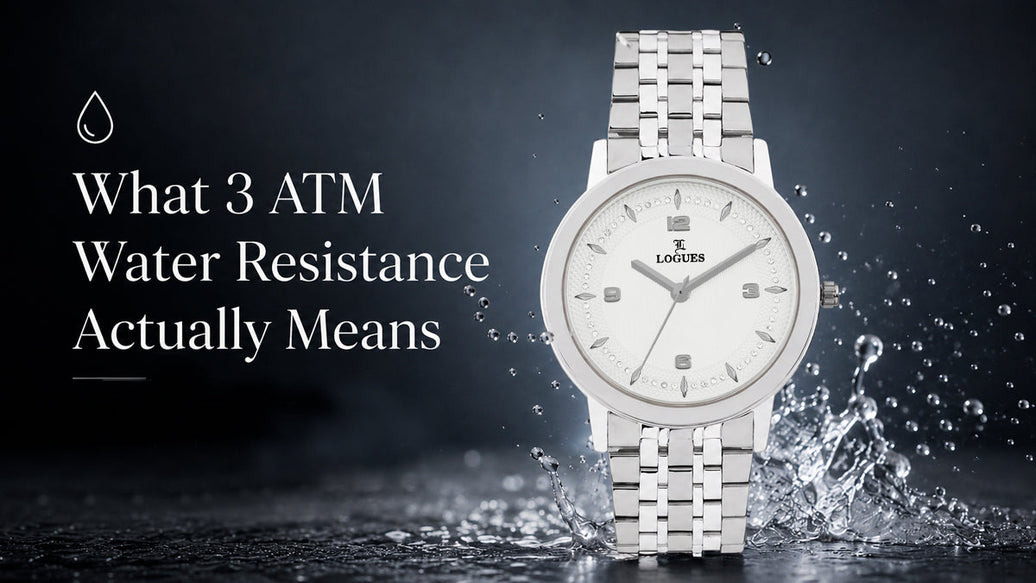
3ATM is normal in this segment and it is genuinely useful, covering rain, splashing and sweat comfortably. What it does not cover is swimming or showering, whatever a marketplace listing implies with a photograph of a watch near water. If a listing at this price actively claims swim readiness, treat that claim as a reason to doubt everything else in the description, because a brand willing to overstate that specification is unlikely to be scrupulous about the ones you cannot verify.
Decide the Movement Before You Start Shopping
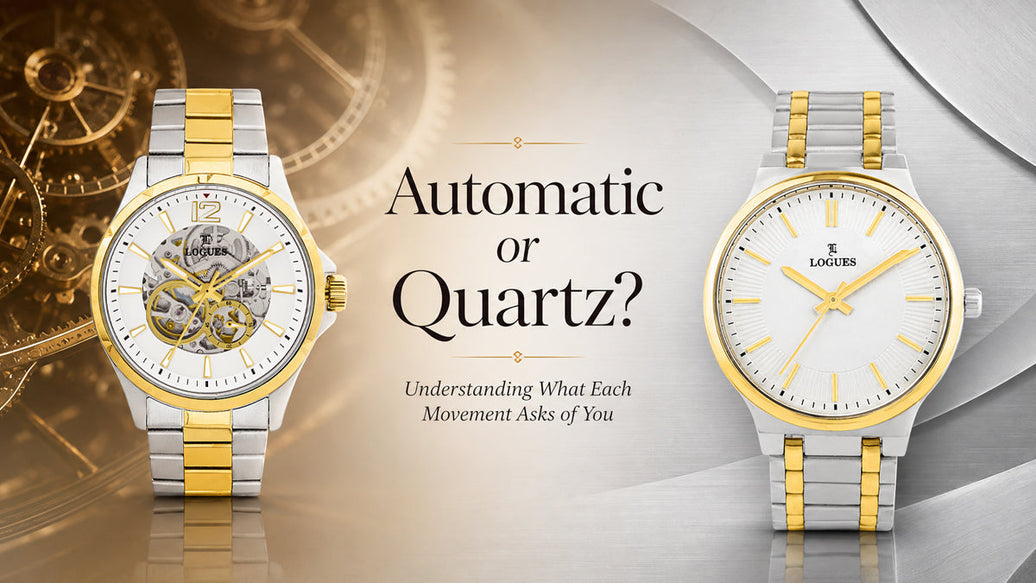
Japanese quartz movements dominate this segment and choosing one is a sound decision, not a compromise. They are accurate to seconds per month, mechanically robust, inexpensive to service, and they free up budget that the manufacturer can then spend on case finishing, dial work and bracelet construction rather than on the movement itself. For a watch that will be worn irregularly, quartz is straightforwardly the better answer, because it will be running and correct whenever you reach for it.
Automatic watches do exist at this level and they change the ownership experience entirely rather than incrementally. You get a self winding mechanism instead of a battery, a sweeping seconds hand, typically an exhibition case back showing the rotor, and a watch that will still be repairable decades from now. What you accept in exchange is a watch that needs regular wear or hand winding to keep running, and that keeps time to a few seconds per day rather than per month. Neither movement is the better product. They are answers to different questions about how you intend to use the watch.
Examine the Strap and the Clasp Carefully
Straps and bracelets are where cost gets removed most quietly, because they are the component buyers scrutinise least and photograph worst. A genuine leather strap with stitched rather than glued edges will soften, mould to your wrist and improve for a year or more. A bonded or coated leather strap, which is essentially fibre with a surface applied to it, will crack along the fold points near the lugs within a year and cannot be rescued.
Steel bracelets tell you even more. Solid links joined with screws or pinned connections sit properly, feel substantial and last indefinitely. Folded and stamped hollow links, made by bending sheet metal rather than machining solid stock, rattle audibly against each other, stretch over time as the connections wear, and are the single most common reason an otherwise decent watch ends up unworn in a drawer. Check the clasp separately, because a stamped clasp attached to a solid bracelet is a clear signal about where the budget ran out.
Read the Warranty and Check the Seller
Two years is the reasonable benchmark for this segment and it is a fair thing to expect. What matters more than the duration is whether the warranty is a manufacturer warranty honoured across a service network, or a seller warranty that exists only as long as that particular vendor does. Check whether service is genuinely available near you, and whether the seller appears among the brand's authorised channels. A warranty that requires couriering a watch to an unnamed address and hoping is not really a warranty.
Buy for Your Wardrobe Rather Than for the Trend
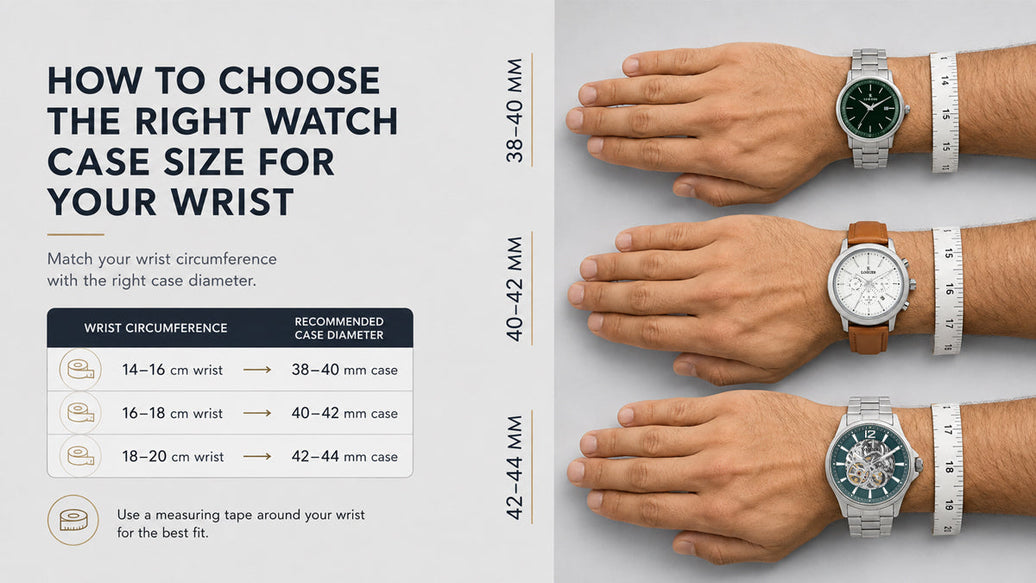
The most useful filter at the end of all this is simply which watch you will actually reach for on a Tuesday morning. For most people that means a case between 38 and 42 mm, a dial legible at a glance without effort, and a strap that works with office wear and weekend clothes without looking out of place in either. A white or silver dial on a steel case remains the most versatile combination available at any price, with navy close behind. Neither will ever look like a mistake, which is more than can be said for most of what trends toward at this price.
Final Thoughts
Everything above amounts to seven checks that take five minutes and separate a watch that will still look good in two years from one that will not. Case material, crystal, water resistance claim, movement, strap construction, clasp, and warranty channel. None of them require expertise, and all of them are stated in a properly written listing.
The Logues analogue and multifunction collections cover this price band with stainless steel cases, sapphire coated glass and 3ATM water resistance as standard, backed by a two year warranty. Case dimensions, movement type, crystal and strap material are listed on every product page so you can run all seven checks before you order.
Leave a comment