
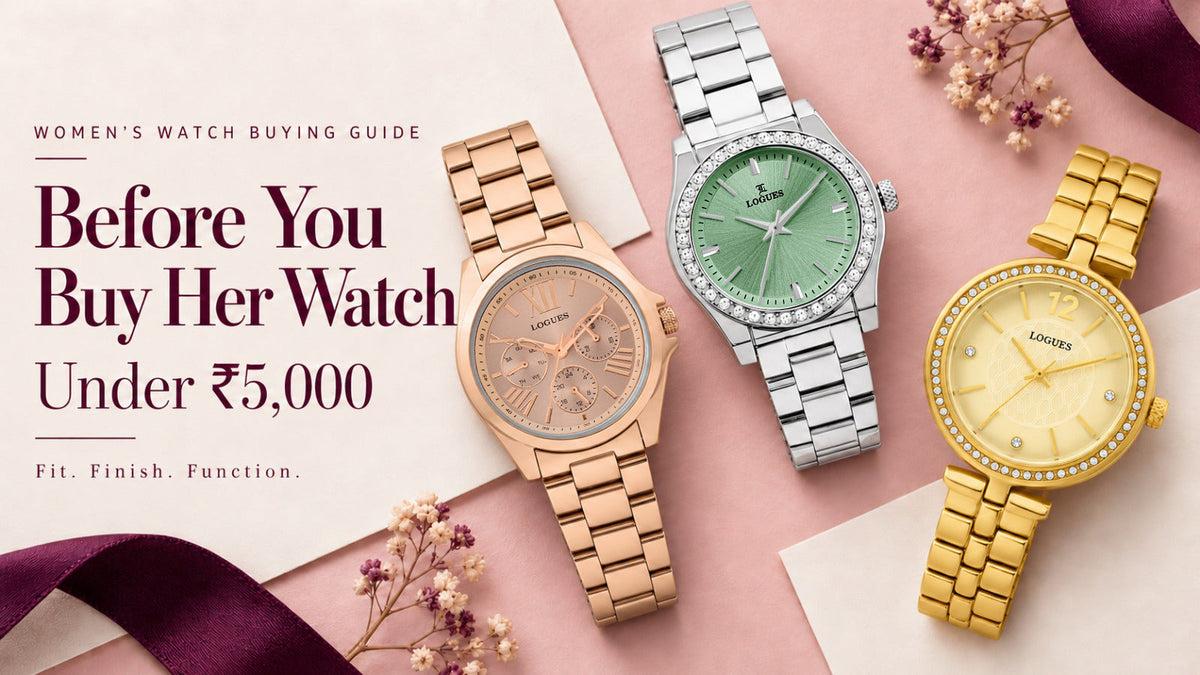
A Women's Watch Buying Guide: What to Check Before Spending Under Rupees 5000
Women's watch buying is served considerably worse by online listings than men's is, and the reason is structural rather than accidental. A great deal of what is marketed as a women's watch is sold on appearance alone, with the specifications either absent or buried, on the assumption that the buyer is choosing jewellery rather than a watch. The result is a segment where two pieces at the same price can differ enormously in build quality, and where the difference only becomes apparent months later. The checks that matter are exactly the same as they are for any watch. What follows is what to look at and why each one matters.
Case Material Comes First
Look for stainless steel stated explicitly, ideally 316L or an equivalent grade. It resists corrosion in humid and coastal conditions, takes a proper polished or brushed finish, holds a rose gold or two tone plating far better than a base metal does, and does not react with skin over long term contact.
The listings that need caution are the ones describing the case as alloy or metal, or omitting the material altogether. Base metal cases with a decorative plating are especially common in women's watches because the slimmer cases and lighter construction make the substitution harder to detect by feel. They photograph identically for the first several months. What follows is plating wear at the lug edges and around the case back where contact and friction are constant, exposing a differently coloured metal beneath, and a plated base metal case cannot be refinished.
Understand What Plating Actually Is
This matters more in women's watches than anywhere else, because rose gold and gold tone finishes dominate the segment and every one of them is a plating over a base.
The relevant question is not whether the watch is plated, since almost all of them are, but what it is plated onto and how. Ion plating, often listed as IP, is a vacuum deposition process that produces a considerably harder and more durable surface than conventional electroplating, and it is the finish worth looking for on a tone case. A stainless steel case with ion plating will hold its colour through years of daily wear. A base metal case with a thin conventional plate will not hold it through one.
Case Size and Why Smaller Is Not Automatically Correct
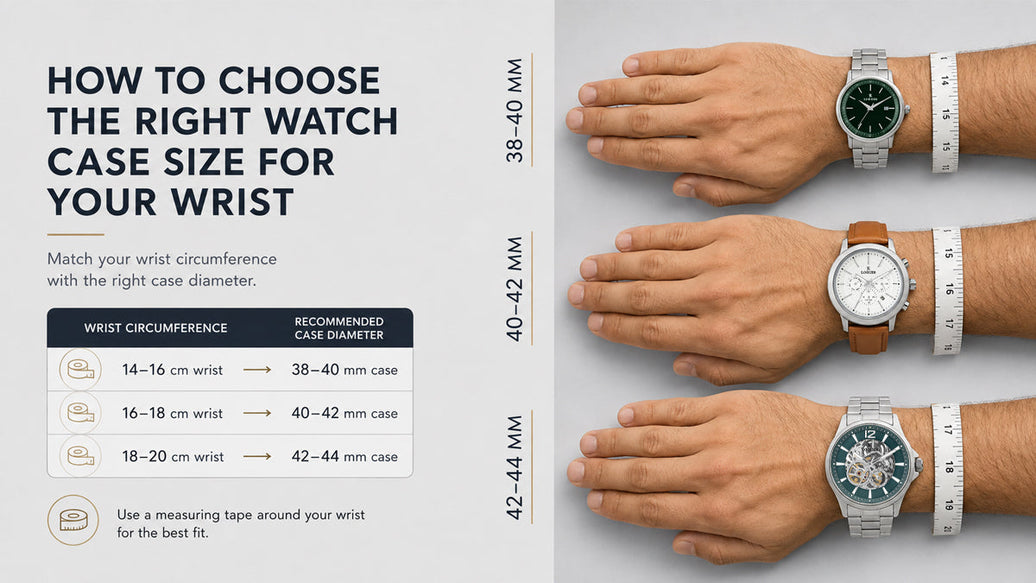
The default assumption that a women's watch should be small has produced a great many watches that are difficult to read and uncomfortable to wear. Size should follow wrist measurement rather than convention.
Measure the wrist with a tape or a paper strip just above the wrist bone. Under 145 mm suits a case between 26 and 30 mm. Between 145 and 160 mm suits 28 to 34 mm. Above 160 mm can comfortably carry 32 to 38 mm, and there is nothing unusual about a woman wearing a 36 mm case. The single test that matters is whether the lugs sit within the width of the wrist rather than overhanging it.
Thickness deserves separate attention, because a slim case sits better under sleeves and is far more comfortable under the cuff of anything fitted. Under 9 mm is genuinely slim and worth prioritising if the watch will be worn with formal or traditional clothing.
The Crystal Decides How It Looks in Year Two
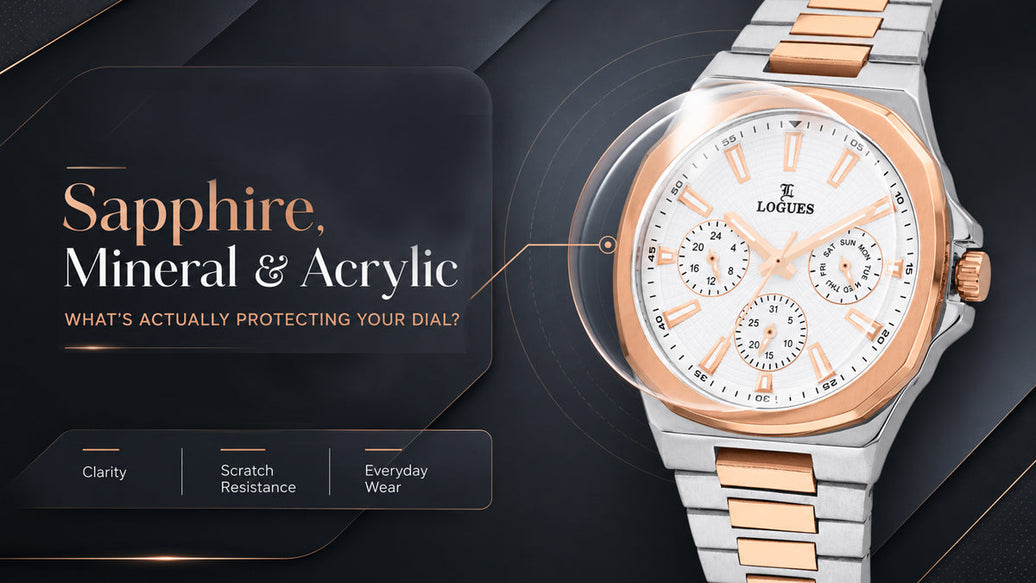
At this price point mineral glass is standard and sapphire coated glass is the meaningful upgrade. This specification has no effect on how the watch looks when it arrives and an enormous effect on how it looks after eighteen months of wear.
It matters more on a dressy watch than on a sports watch, because a hazed and finely scratched crystal on a polished rose gold case is far more visible than the same wear on a brushed steel sports case. If you are choosing between two watches and one has sapphire coated glass, that is the one.
Movement: Quartz Is the Right Default Here
Japanese quartz dominates this segment and it is the correct choice for most buyers, not a compromise. It keeps time to seconds per month, it needs no attention beyond a battery every two to three years, and it allows a genuinely slim case because there is no mainspring barrel or winding rotor to accommodate.
It is also the practical answer for a watch that is worn selectively rather than daily. A watch kept for occasions should be running and correct when you reach for it, and an automatic that has sat unworn for a fortnight will be stopped. Automatics in women's sizes do exist and they are lovely objects, but they suit someone who will wear the watch most days rather than someone building a wardrobe of several.
Bracelet and Strap Construction
This is where cost is most quietly removed in women's watches, because the components are smaller and the shortcuts are correspondingly harder to see.
On a bracelet, look for solid links with screwed or properly pinned connections. Folded and stamped hollow links, made by bending sheet metal rather than machining solid stock, are common in slim women's bracelets and they rattle, stretch at the joints and catch on clothing. Check the clasp separately, and be particularly wary of a butterfly clasp that feels flimsy, since it carries the entire weight of the bracelet at a single point.
On leather, look for stitched edges rather than glued and bonded construction. Bonded leather is compressed fibre with a surface applied to it and it will delaminate rather than age. Expect twelve to eighteen months from a daily worn leather strap in Indian conditions, and treat replacement as a running cost.
Mesh deserves a specific mention here because it suits this segment particularly well. It is steel, so it tolerates sweat and humidity indefinitely, it is slim and flexible, and its sliding clasp adjusts continuously rather than in fixed link increments. For anyone who falls between standard bracelet sizes, which is common at smaller wrist measurements, mesh removes the sizing problem entirely.
Dial Choices That Stay Versatile
White, silver, champagne, pearl and navy dials work across formal wear, office wear and traditional clothing without effort. Rose gold tone cases sit particularly well against reds, maroons and warmer traditional palettes, while steel is the more neutral choice across a modern wardrobe.
If the watch is to be the only one owned, choose the dial that disappears rather than the one that announces itself, since a versatile dial gets worn and a statement dial gets worn occasionally.
Warranty and Seller
Two years is the reasonable benchmark. What matters more is whether it is a manufacturer warranty honoured through a service network or a seller warranty that exists only as long as the vendor does. Confirm the seller appears among the brand's authorised channels, keep the invoice and the stamped warranty card together, and photograph both on the day the watch arrives.
Final Thoughts
Nothing in this guide is specific to women's watches except the plating question and the sizing ranges. The checks are the same ones that separate a good watch from a poor one at any price, and the only reason they matter more here is that the listings are less likely to volunteer the answers.
The Logues women's collection covers this price band with stainless steel cases, sapphire coated glass and 3ATM water resistance as standard, in case sizes from 26 to 36 mm across steel, two tone and rose gold tone finishes, with a two year warranty on every reference.
Leave a comment